Copyright Claim VS Copyright Strike Explained: Helps Creators Avoid Mistakes
We all understand and know that sinking feeling hits the moment you see a copyright email in your inbox. Your heart drops, your mind races, and you start wondering if your channel is about to disappear, right? Indeed, copyright notices sound scary, especially when you’ve worked hard to build your content and audience. But before you panic so much, here is a simple trivia for you.
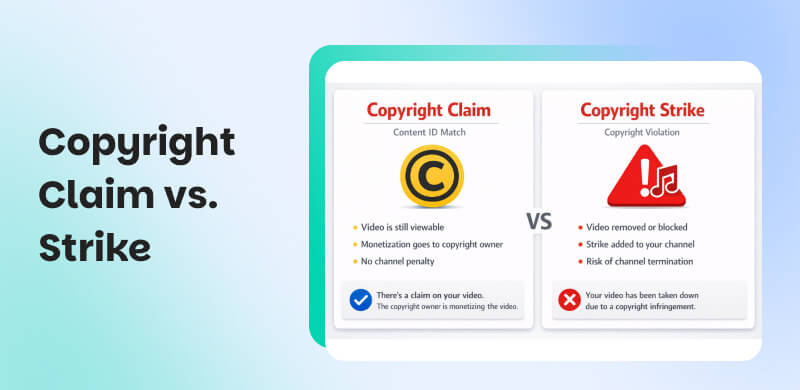
For those who do not know, a copyright claim usually affects only your money, like ad revenue or monetization, while a copyright strike threatens your channel’s existence. Thus, if you are one of the people who have a financial inconvenience, then this is a serious warning. Understanding this difference between Copyright Claim vs. Copyright Strike can help you respond calmly and choose the right solution. We are here to help, please read the details you need below.
1. Copyright Claim VS Strike at a Glance
| Copyright Claim | Copyright Strike |
| Trigger | Usually automatic. | Usually manual. |
| Severity | Low. | High. |
| Channel Impact | Affects revenue. | Threatens the channel. |
| Expiration | Often lasts until the claim is removed or the video is edited or muted. | Expires after 90 days if no further strikes occur. |
| Action Required | Optional. Dispute, trim, mute, or leave it as is. | Immediate. Take a copyright course and avoid further violations |
2. What is a Copyright Claim?
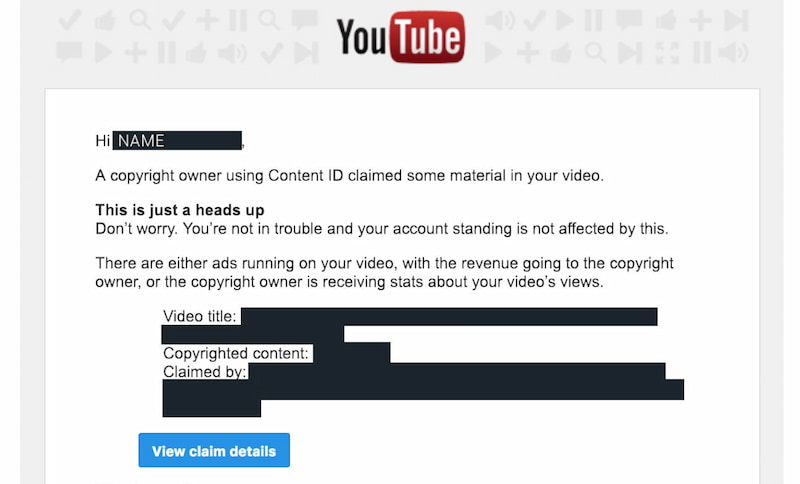
As we move forward, let us now define Copyright Claim or also known as a Content ID claim, This happens when YouTube’s automated system detects copyrighted material from the video you posted. It is important to know that YouTube uses Content ID, which is defined as a fingerprinting technology that compares your upload against what they called a database of music, videos, and images provided by copyright owners. Therefore, if your content has a match, a claim will be created automatically.
How Does It Happen?
This usually happens when you use a song, movie clip, image, or background music that belongs to someone else on your content videos and decide to post it on YouTube. One trivia about it is that most claims are not made by people, they are triggered by the system itself.
The Consequence
So, if you are asking about its consequences, then the main consequence is on monetization. It is affected because he copyright owner can take all or part of the ad revenue from your video. Since you used some of their music or videos. In some cases, they may also block your video in certain countries or worldwide.
Overall Reminder
The most important thing to remember is that a copyright claim does not harm your channel. It does not give you a strike and does not count toward YouTube’s three strikes rule. It mainly affects your earnings and where your video can be viewed.
3. What is a Copyright Strike?
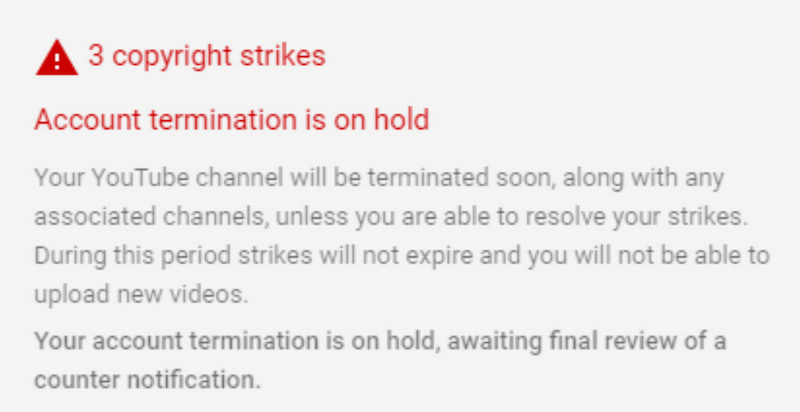
Copyright strike happens when a copyright holder formally requests that your video be taken down under the Digital Millennium Copyright Act OR DMCA. As we all know, strikes are legal actions with severe repercussions, in contrast to automated claims. In this instance, YouTube enforces the three strikes rule, which states that a channel may be terminated if three strikes are accumulated within ninety days. But it's crucial to understand that even a single strike can momentarily limit the features of your account, like live streaming, custom thumbnails, and monetization. Thus, content creators online especially in YouTube need to understand and prevent these strikes to happen, or else their career will be affected.
4. How to Resolve a Copyright Claim Issue
If you are one of the online creators that received a copyright claim on YouTube, the first thing you can do is not panic. Because you have three things and ways to handle it safely, read them below:
- • Do Nothing. If you’re okay with the copyright owner taking the ad revenue, you can leave the video as-is. This is the simplest option and keeps your video public without affecting your channel.
- • Mute, Trim, or Replace. YouTube’s built-in editor allows you to remove or replace copyrighted audio. You can also trim out the offending section, which can restore monetization if no other content is claimed. This is a practical option for maintaining your video while avoiding revenue loss.
- • Dispute the Claim. Only use this if you have a valid license, the content is in the public domain, or you believe the claim was made in error. YouTube reviews disputes, and incorrect claims can be rejected, returning control to you.
5. How to Deal with a Copyright Strike
A copyright strike is far more serious than a claim and can impact your channel’s features or even its existence. Handling it carefully is essential. In line with that, we prepare you practical steps you can do to address as you resolve a copyright strike effectively, see them below:
- • Wait for Expiration. Strikes typically expire after 90 days, but you must complete YouTube’s copyright school during this period to maintain your account in good standing. This is often the simplest approach if you don’t want to escalate the situation.
- • Make a Retraction Request. You can respectfully email the copyright owner to request that the strike be lifted if they consent. Be professional, give a reason why you think the strike is needless, and include any supporting documentation.
- • Send in a Counter Notification. When your video was accidentally taken down, it falls under fair use, or you are the owner of the content, you can use this legal procedure. You must give accurate information and be aware that doing so may result in legal action.
6. Common Misconceptions VS Realities
Many creators misunderstand copyright that can lead them to different problems or legal risks. In connection with that, we have here some common myths and realities about copyright and the corresponding realities every creator should know to stay safe.
| Reality |
| I gave credit in the description, so I’m safe. | Giving credit does not replace a license. You still need permission to use copyrighted content legally. |
| I only used 5 seconds of the song. | There is no 5-second rule in copyright law. Even a few seconds can trigger a claim or strike. |
| My video is non-profit, so it’s fair use. | Non-profit use is only one factor in fair use. Courts consider purpose, amount used, effect on the market, and the nature of the work. |
7. Proactive Tips: How to Avoid Future Issues
As you prevent copyright issues, remember that it is always easier compared to dealing with claims or strikes. Also, a good tip, a little preparation can save you a lot of stress. For that, here are some practical tips every creator should follow:
- • Use the audio library on YouTube. YouTube provides a free collection of sound effects and music that are suitable for any kind of video. These songs are ideal for low-budget creators and won’t give rise to copyright claims.
- • Invest in Paid Libraries. Services like Epidemic Sound or Artlist provide high-quality music with clear licensing for commercial use. These are ideal if you want more variety and professional-sounding audio.
- • Always Check During Upload. YouTube’s automated checks step scans your video for potential copyright issues before it goes public. Reviewing these results carefully can prevent blocked videos or claims.
- • Recognize Fair Use. Discover the four elements: nature, quantity used, impact on the market, and purpose. This information lowers your legal risk and aids in your decision-making.
FAQs about Copyright Claim vs. Strike
Is it possible to remove a strike by deleting a video?
No. The strike remains on your channel even after you delete the video. Until it expires, the claimant retracts it, or a counter notification successfully challenges it, the strike is in effect.
Will my channel be harmed by a copyright claim?
No. Although copyright claims have an impact on visibility or revenue, they do not violate the three-strikes rule and do not jeopardize the viability of your channel.
Even if I used a brief clip, can I still contest a claim?
Only if the content is in the public domain, you have a valid license, or it falls under fair use. Short videos by themselves don't always qualify as legal.
How long does a strike last?
Strikes usually expire after 90 days, but you must complete YouTube’s copyright school to keep your account in good standing and maintain channel features.
Can I monetize a video with a claim?
Monetization video with a claim depends on the copyright owner. They may take the ad revenue, share it with you, or block monetization entirely.
Conclusion
Understanding the difference between a copyright claim and a strike is crucial for every creator. Claims generally affect money, while strikes threaten your channel’s features or existence. By following YouTube’s guidance, using safe content, and handling disputes professionally, you can protect your channel, maintain monetization, and avoid unnecessary stress while continuing to create confidently.
Ethan Carter
Ethan Carter creates in-depth content, timely news, and practical guides on AI audio, helping readers understand AI audio tools, making them accessible to non-experts. He specializes in reviewing top AI tools, explaining the ethics of AI music, and covering regulations. He uses data-driven insights and analysis, making his work trusted.


 by
by