Dub vs Sub: Which Will Change How You Watch Foreign Movies
The debate over dub vs sub has become relevant with the rise of foreign-language content on streaming platforms. While audiences in many non-English-speaking countries tend to prefer subtitles, viewers in the United States often favor dubbing. This is because only a small fraction of foreign films are released with subtitles. Understanding the difference between dub and sub is essential. Your choice can significantly influence how you experience a movie or series. In this post, we will explore these differences in detail. Additionally, we will guide you on when each option is most suitable for your viewing preferences.
Part 1. Sub and Dub Meaning
When watching foreign films, series, or videos, two common terms appear: sub and dub. But what does sub and dub mean? Well, both are methods of translation used in the media. However, they serve different purposes depending on the viewer’s needs and the type of experience the creator wants to deliver.
What is Sub?
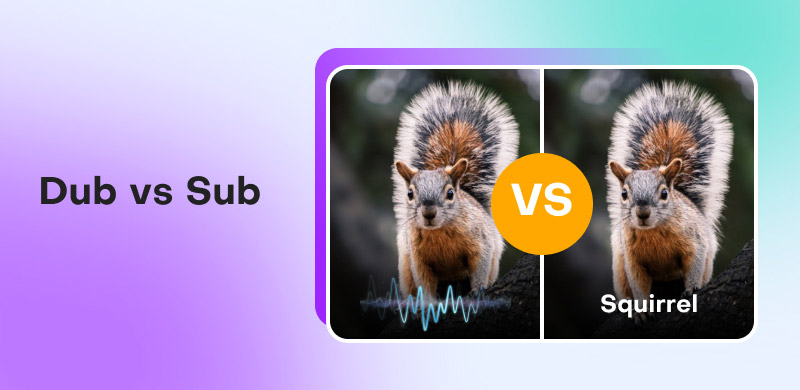
Sub, short for subtitles, are texts that appear on the screen to translate spoken dialogue into another language. Its purpose is to help viewers understand the content while keeping the original audio intact. Subtitles enable audiences to hear the actors' genuine voices, emotions, and tone, thereby preserving the authenticity of the performance.
| Why Use Sub |
| When the movie or show is in a language you don’t understand and you need translation. | To understand dialogue without changing the original voices, tone, and emotional delivery. |
| When the audio is unclear due to noise, mumbling, or low sound quality. | To follow the story more clearly when the sound isn’t loud or clear enough. |
| When watching in a quiet or public place where you can’t raise the volume. | To improve comprehension of foreign films while preserving authentic cultural expression. |
| When characters speak too fast or have strong accents that are difficult to follow. | To avoid pausing or rewinding frequently just to catch what the characters said. |
What is Dub?
Voice replacement (dub synonym) replaces the original audio with a new voice track recorded in a different language. Its purpose is to make the content feel more familiar and accessible to the audience. In dubbing, voice actors perform translated dialogue that matches the characters’ expressions and timing. This gives the impression that they are speaking the viewer’s language.
| Why Use Dub |
| When the audience prefers to watch without reading subtitles and focus on the visuals. | To make content easier to follow without constantly looking down at text. |
| When the content is intended for younger viewers or children who can’t read quickly or fluently. | To improve accessibility for viewers who cannot read subtitles due to age, disability, or reading challenges. |
| When the goal is to make a foreign show or movie feel more natural and localized for viewers. | To allow audiences to enjoy emotional delivery, tone, and character expression in a language they fully understand. |
| When releasing content to international markets where the target audience expects dialogue in their own language. | To make foreign content feel like it’s originally produced in the viewer’s language. |
Part 2. What’s the Difference Between Sub and Dub
The main difference between sub and dub lies in how a foreign film or show is translated for viewers. Sub keeps the original audio and provides translated text on the screen. Meanwhile, dub replaces the original dialogue with a new voice track in another language. Subtitles are ideal for individuals who value authenticity or prefer to read while watching. Dubbing, on the other hand, focuses on convenience and immersion. It allows audiences to listen in their own language without needing to read the text. In simple terms, subs prioritize authenticity and original audio, while dubs prioritize comfort and easy comprehension.
Don’t confuse captions with subs and dubs! Learn what a caption is and how each one changes the way you watch foreign movies or anime.
Part 3. Anime Sub vs Dub: Is it Important? Which is Better
The anime sub vs. dub debate is the most widely discussed topic within the community. This is a topic most frequently discussed among English-speaking fans in the United States. The debate centers on whether anime should be watched with original Japanese audio and subtitles or English-language voice acting. Each side has passionate supporters with different reasons for their preferences.
Many American anime fans argue that subtitles are better because they preserve the original voice performances, cultural expressions, and nuances that are often lost or adapted in dubs. This camp believes subtitles allow viewers to experience the show exactly as it was created. Subs are also typically available earlier, which appeals to fans who follow anime on a weekly basis.
On the other hand, many fans prefer dubs because they make watching anime easier and more immersive for English speakers. Dubbing eliminates the need to constantly read text, which some viewers find distracting. Modern English dubs have significantly improved in quality, with many voice actors delivering performances that rival or even reimagine original emotional beats.
So which is better? sub or dub? There is no single correct answer; it ultimately comes down to personal preference and the viewing context. In my opinion, watching both versions when available lets you appreciate different aspects of the same show without needing to choose one as superior.
Part 4. Sub or Dub: When to Use Them
Choosing between subtitles and dubbing depends on your personal preference and viewing situation. Both have unique advantages, and knowing when to use each can enhance your anime-watching experience.
Use Subtitles When:
- • You are learning the language or enjoy practicing it while watching.
- • You value authenticity and want to experience the movie exactly as it was created.
- • You want to hear the original voice acting, which often carries emotional nuances lost in dubs.
- • You are seeking a more immersive cultural experience, including hearing expressions, honorifics, and dialogue style.
Use Dubbing When:
- • You need convenience, such as when multitasking or watching casually.
- • You are watching with friends or family who may not like reading subtitles.
- • You prefer a relaxed and seamless viewing experience without needing to read subtitles.
- • You want to focus on the visuals or enjoy fast-paced action scenes without distraction.
No dub? No problem! Use YouTube Music Downloader to get dub tracks and enhance your movie experience.
Part 5. FAQs about Sub and Dub
Q: How do you choose between dub and sub?
A: If you value authenticity, want to hear the original voices, or enjoy the cultural nuances and language immersion, subtitles are the better choice. However, if you prefer convenience or find it easier to watch in your native language, dubbing may be a more suitable option.
Q: What are the challenges of dubbing?
A: Dubbing faces several challenges, the most significant being lip-syncing and timing. Voice actors must match their dialogue to the mouth movements of characters. This can be difficult when translating because sentence structures, word lengths, and expressions differ.
Q: Which is more accurate, sub or dub?
A: In terms of accuracy, subtitles generally have the edge. Subtitles can directly translate dialogue while preserving the original intent, expressions, and cultural nuances. Meanwhile, dubs may involve adaptations or simplifications to fit timing, lip-sync, or readability.
Conclusion
When deciding between dub vs sub, it’s essential to consider several key factors. This includes personal preference, viewing context, and the audience. While both dubbing and subtitling serve the same purpose, they do so in different ways. Subs preserve the original voices and cultural nuances, whereas dubs offer a more seamless, convenient experience in the viewer’s native language. Understanding these differences can help you choose the option that best enhances your enjoyment. Ultimately, both subs and dubs have their place, and the right choice depends on how you want to experience the story.
Ethan Carter
Ethan Carter creates in-depth content, timely news, and practical guides on AI audio, helping readers understand AI audio tools, making them accessible to non-experts. He specializes in reviewing top AI tools, explaining the ethics of AI music, and covering regulations. He uses data-driven insights and analysis, making his work trusted.

 by
by