Transcriptionist vs. Captioner: Everything You Need to Know
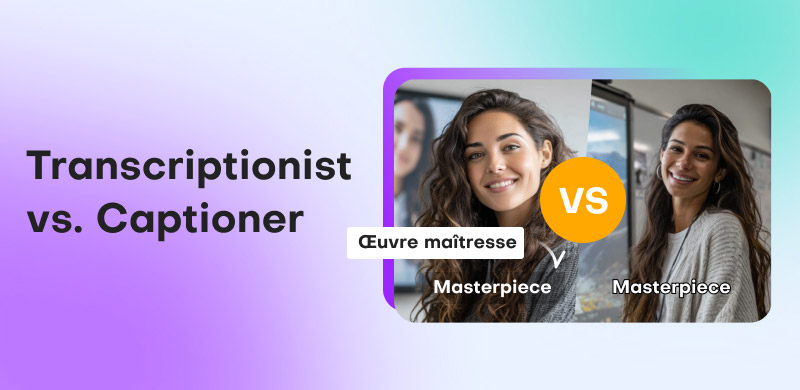
When exploring the roles of a transcriptionist and captioner, it is easy to assume they're interchangeable. However, in reality, they serve different purposes shaped by context and audience needs. A transcriptionist transforms spoken language into written text, often for interviews, records, or legal proceedings, where accuracy and detail are paramount. On the other hand, a captioner not only transcribes speech but also adapts it for real-time or recorded video, ensuring accessibility by synchronizing text with audio and, when appropriate, including nonverbal cues such as music or sound effects. If you want to learn more about the two, it's better to read this post, which has all the details you need.
Part 1. What is a Transcriptionist
A transcription tool is software or hardware that enables experts to transcribe audio or video recordings more quickly. To speed up transcription, these applications often include playback controls, foot pedal support, timestamping, and speech recognition. They help transcriptionists in fields including law, medicine, media, and education handle various file formats, increase accuracy, and save time. Notwithstanding its advantages, problems remain, including low audio quality, technical jargon, and the need for human inspection.
Features
Playback Control
Tools often include variable-speed playback and rewind/fast-forward options, letting transcriptionists capture every word.
Text Editing and Formatting
Built-in editors streamline the process of cleaning transcripts and applying industry-specific formats. With this feature, you can ensure a better output.
Timestamping and Speaker Identification
Many tools can automatically insert timestamps and help various speakers for clarity. It is ideal if you need detailed information.
Speech Recognition
Some AI-powered transcription tools can generate draft text, which is ideal for accuracy.
Capabilities
Some of the capabilities of a transcriptionist are:
- • Convert audio and video to text instantly and accurately.
- • Support real-time transcription and batch processing.
- • It supports various file formats, including MP3, MP4, and WAV.
- • Improve accessibility by adding captions and subtitles.
- • Offer searchable transcripts for legal, business, or medical use.
Example Tools for Transcriptionist
If you are looking for an excellent transcription tool, you can find the best options below.
- • InqScribe – This tool offers advanced subtitling and timestamping features.
- • Descript – This is an AI-powered transcription tool that offers editing and collaboration features.
- • oTranscribe – If you need a free tool to transcribe, you can use this tool. It also has a simple playback and text editor.
- • Express Scribe – It is an ideal transcription tool with foot pedal support.
- • Otter AI – It is a cloud-based tool ideal for speech-to-text transcription.
Industries Using Transcriptionist Tools
Some of the sectors that use Transcriptionists are:
- • Legal: Court reporting, depositions, hearings.
- • Media & Entertainment: Interviews, podcasts, documentaries.
- • Business: Meeting minutes, corporate communications.
- • Medical: Doctor dictations, patient records.
- • Education: Lectures, research interviews.
Challenges of a Transcriptionist
In transcription, there are some challenges you might encounter, such as:
- • You might encounter an audio quality issue. There may be background noise, poor audio quality, and overlapping voices.
- • Some tools may provide high accuracy. Some speech recognition might struggle with accents and technical terms.
- • Time pressure is another challenge. Some industries demand fast turnaround.
- • There must be a human oversight. Even with AI, manual review is necessary to ensure precision.
- • Some advanced tools can be expensive and require a subscription.
Part 2. What is a Captioner
A captioner is a professional who translates spoken language and relevant audio cues into on-screen text synchronized with the video. Unlike transcriptionists, captioners modify text for readability and accessibility, often incorporating laughter, background noise, or nonverbal sounds such as music. Their efforts improve comprehension in noisy or multilingual environments and ensure video content is accessible to viewers/audience, particularly those who are deaf or hard of hearing.
Features
Synchronization
The advantage of a captioner is that it provides better synchronization. It is ideal since the caption must be timed precisely to match spoken words and visual cues. It ensures that audiences or viewers can follow along seamlessly.
Formatting
Captioner can also follow a better format for an excellent output. It can follow an ideal style, placement, readability, and line length.
Accessibility
A captioner includes non-speech elements, such as applause, door slams, sneezing, and more. It is to provide a full context, making the video compliant and inclusive with accessibility standards.
Capabilities
After learning the meaning of captioner, you might wonder about its capabilities. A good captioner can do various things, like:
- • It can create closed captions for a recorded clip.
- • It can provide real-time captions for live broadcasts with minimal delay.
- • It can offer multilingual captions for a global audience.
- • A captioner can support accessibility compliance with laws and regulations.
Example Tools for Captioner
There are various captioners available, depending on the platform. For more insights, see the information below.
- • Software – If you prefer using software for creating captions, you can use CaptionMaker, Subtitle Edit, Aegisub, and EZTitles.
- • AI Platforms – If you want an AI-powered tool, use Otter AI for draft captions, Rev, and 3Play.
- • Video Editors – You can also use advanced tools that offer captioning features, such as Final Cut Pro and Adobe Premiere Pro.
Industries Using Captioner Tools
Some of the industries that use Captioner are:
- • Broadcast Media: TV shows, live news, sports events.
- • Education: Online courses, lectures, webinars.
- • Corporate: Training videos, presentations.
- • Streaming Platforms: Netflix, YouTube, Hulu.
- • Entertainment: Films, documentaries, gaming streams.
Challenges of a Captioner
For a captioner, you can also encounter some challenges, such as:
- • You may feel under pressure, as live captioning requires precision and speed.
- • There can be a complex audio that makes captioning difficult. Some of them are accents, overlapping voices, and poor sound quality.
- • Some formats must be followed, especially regarding placement, timing, and readability.
- • The accuracy, readability, and balancing speed are mentally demanding.
Part 3. Differences Between a Transcriptionist and a Captioner
Want to learn the differences between transcription and captioning? You can check the simple table below.
| Transcriptionist | Captioner |
| Goal | Convert spoken audio into accurate written text for records and documentation. | Provide synchronized on-screen text for video to ensure accessibility. |
| Work Products | Written transcripts (documents, reports, notes). | Captions/subtitles embedded or linked to video content. |
| Non-Speech Info | Typically excludes non-verbal sounds unless requested (e.g., [laughter]). | Always includes non-speech cues like music, sound effects, or background. |
| Synchronication | Not required; text is standalone. | Essential—captions must align precisely with audio/video timing. |
| Reading Speed | No adaptation needed; transcripts can be read at any pace. | Text is condensed for readability at normal viewing speed. |
| User Base | Legal professionals, medical staff, researchers, businesses, and educators. | Audiences needing accessibility (deaf/hard of hearing), media consumers, and students. |
| Required Skill | Strong grammar, typing speed, attention to detail, and subject-matter knowledge. | Timing precision, readability adaptation, and knowledge of accessibility rules. |
Part 4. Transcriptionist vs. Captioner: Which One Do You Need?
After learning about the two, you may wonder which one you need. Then, review the details below for more guidance on what to use.
For Content Creators and Businesses
Transcriptionist - You need a transcriptionist when you are dealing with written records of spoken content. It includes podcasts, webinars, interviews, and meetings. Well, their transcripts can be repurposed into SEO content, documentation, or a blog post, making them valuable for content marketing.
Captioner - Ideal if the goal is accessibility and audience engagement with video. Captions not only make content accessible to deaf or hard-of-hearing viewers but also expand reach on social platforms where videos autoplay silently. They attach context by including non-speech cues and ensure compliance with accessibility standards.
For Job Seekers
Transcriptionist - It is suitable for people with good typing speed, grammar, and attention to detail. Benefits include the opportunity to specialize in specific areas (e.g., medical transcribing), flexible remote work options, and consistent demand across academic, legal, and medical fields.
Captioner - Perfect for people with good language comprehension skills, fast reflexes, and the capacity to modify text for readability. Benefits include media, broadcasting, and online learning opportunities, as well as rising demand brought on by accessibility regulations and the globalization of streaming services.
Part 5. FAQs about Transcriptionist vs. Captioner
Q. What is the main difference between a transcriptionist and a captioner?
A. The main differences are that a transcriptionist produces a text from an audio recording. On the other hand, a captioner creates on-screen text for the video.
Q. Which role needs a synchronization skill?
A. The captioner is the one who needs a synchronization skill since they must time the text with the audio and video.
Q. Is it better to be a transcriptionist?
A. Well, it depends on your needs. If you want to transform audio recordings into text, being a transcriptionist is ideal.
Conclusion
Transcriptionists and captioners play different roles. Thanks to this post, you have learned everything about them, including their definitions, features, challenges, capabilities, industries, and differences. You also got an idea of what to use to achieve your goal. Thus, if you want to get a text form from an audio or video recording, use a transcriptionist tool. On the other hand, if you want to display text on the video, use a captioner.
Ethan Carter
Ethan Carter creates in-depth content, timely news, and practical guides on AI audio, helping readers understand AI audio tools, making them accessible to non-experts. He specializes in reviewing top AI tools, explaining the ethics of AI music, and covering regulations. He uses data-driven insights and analysis, making his work trusted.


 by
by