Dubbing and Voice Over: Everything You Need to Know
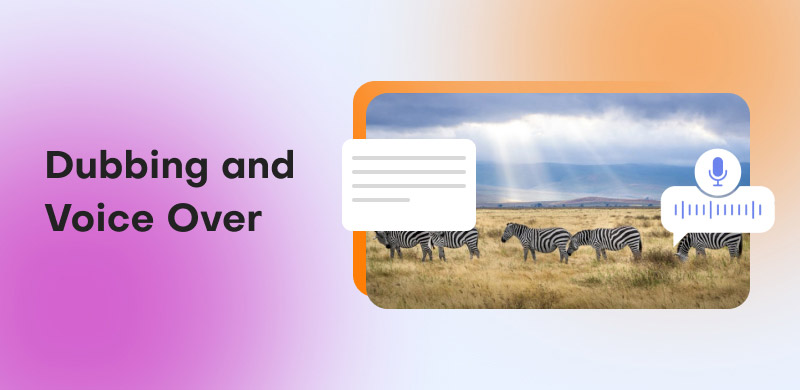
Dubbing and Voice-over are two necessary techniques in the industry of audio-visual production. It is often used to bridge cultural gaps and language barriers. Well, dubbing is about replacing the original spoken dialogue with a translated version, while Voice-over overlays narration on top of the original audio without aligning the actor's lips. If you are interested in learning more about dubbing and voice-over, you must check this article. We are here to give their description, differences, challenges, and which to use. Thus, to get more insights, read this article right away.
Part 1. What is Dubbing
What is dubbing? Well, it is the technique of adding a new voice recording in a different language to a video or movie in place of the original spoken dialogue. It's not as easy as simply changing the voices. The new dialogue must closely resemble the lip movements of the actors who are performing on screen. Here's when dubbing may turn into an artistic endeavor: synchronizing voice and graphics to make the viewer forget the content was ever in a different language.
Key Features of Dubbing
- • Lip-Syncing – The dialogue that has been translated is carefully timed to align the actor’s lip rhythm, movement, and expression. This is ideal for a better viewing experience.
- • Acting with Voice – the voice actors just show the same tone, intensity, and emotion as the original performers. It ensures that the dubbed version looks natural and realistic.
- • Aural Integration – The new audio must blend with the existing soundtrack naturally, along with the effects and ambient noise, letting the viewers be immersed.
- • Localization – Aside from translation, dubbing modifies humor, expressions, and cultural allusions to appeal to the intended audience and give the text a native feel.
Part 2. What is Voice Over
Want to learn the meaning of Voice-over? It is a technique where the voice is recorded and placed over the existing visual, often without the intention of matching the lip movement of on-screen performers. Voice-over is commonly used in commercials, training videos, storytelling, and documentaries, which can provide translation, narration, and explanation.
Key Features of Voice Over
- • Narrative Authority – It serves as the guiding presence, which shapes how the audience gives meaning to the visual and reinforces the message.
- • Clarity Over Emotion – It emphasizes the emotional performance, which is the opposite of dubbing. The Voice Over also prioritizes a neat delivery, ensuring that the viewers can understand the content.
- • Script Flexibility – It lets more freedom in terms of wording since it does not need to align with the lip movements, which makes it easier to condense the information.
- • Un-Style – The Voice Over will look like a commentary or narration on the content/videos. It does not require synchronizing the voice with the lip movement, which can give a distinct style.
Part 3. Differences Between Dubbing and Voice Over
What are the differences between dubbing and voice-over? Then, you can check the simple table we have provided below.
| Dubbing | Voice-Over |
| Synchronization | Requires precise lip-syncing to match the actors’ mouth movements and timing. | No lip-syncing; narration is placed over visuals, often with original audio faintly audible. |
| Performance Style | Voice actors must replicate/imitate the emotions, tone, and intensity of the original actors. | Focuses on clarity and comprehension, prioritizing message delivery over emotional depth. |
| Localization and Flexibility | Adapts cultural references, idioms, and humor to resonate with the target audience. | Allows script flexibility since synchronization is not required, making adaptation faster and simpler. |
Part 4. Dubbing vs. Voice Over: Which Should I Use
What should I use between dubbing and Voice Over? Well, you can use both of them based on your objective.
You can use dubbing if you are dealing with TV Shows, films, and video games where emotional authenticity and immersion are crucial. This technique is preferable if you want to replace the original dialogue with a translated speech that aligns with the actor's tone and lip movement. It will make the audience think and feel that the content was created in their language. However, you must take note that dubbing requires more effort, time, and budget.
On the other hand, Voice-over is ideal if you are dealing with different types of content. It includes tutorial videos, advertisements, documentaries, e-learning, and corporate videos where authority and clarity are more important than emotional performance. Plus, it overlays translation or narration without lip-syncing, making it more flexible, faster, and budget-friendly.
With that, you can now use both dubbing and voice-over depending on the content you are dealing with. You can use dubbing for replacing voice and for emotional connection, while voice-over is recommended for efficiency and clear communication.
Part 5. Challenges in Dubbing and Voice-Over Industries
Dubbing and voice-over face several challenges today, shaped by technological and cultural factors. Some of the challenges are:
Cultural Barriers in Localization
One of the challenges in dubbing and voice-over is to ensure that the translation can go beyond literal word-for-word conversion. To connect with the target audience, cultural allusions, idioms, humor, and even tone frequently need to be modified. The text may seem uncomfortable, lose its emotional power, or even lead to misconceptions if localization is done incorrectly. Because of this, cultural awareness and innovative adaptation are crucial for dubbing and voice-over productions to succeed.
Impact of New Technology
Another challenge is the impact of new technology. As we all know, the rise of AI and machine learning is reshaping the voice-over and dubbing industry. Various AI-driven tools can generate natural and realistic voices, automate lip-syncing, and offer a faster translation procedure, making the production cost-effective and faster. But since technology may reduce the need for human voice actors, this raises questions about their future. There is a problem between creativity and artistic integrity since, despite its efficiency, AI frequently lacks the emotional complexity, authenticity, and depth that experienced voice actors provide.
Part 6. FAQs about Dubbing and Voice Over
Q. Which industry uses dubbing more often?
A. Dubbing is commonly used in entertainment media. These are TV shows, movies/films, and video games. The focus here is on immersion and emotional authenticity.
Q. Where is voice-over more popular?
A. You can use and encounter voice-over in documentaries, advertisements, corporate training videos and news reports. It focuses on offering clear communication and authority rather than a dramatic performance.
Q. Why is lip-synching crucial in dubbing?
A. Lip-syncing is important in dubbing since it must be aligned with the actor's lip movement. This way, the performance will look natural and feel immersive for the viewers. Without proper lip-syncing, the audience will find it less believable and distracting.
Conclusion
Dubbing and voice-over are ideal techniques when it comes to dealing with your media. Dubbing helps add another voice recording on a video with a different language, while voice-over is perfect for documentaries, TV shows, and other content. Thanks to this post, you have explored everything about the tool. Thus, for better understanding, always visit this post to get more insights.
Ethan Carter
Ethan Carter creates in-depth content, timely news, and practical guides on AI audio, helping readers understand AI audio tools, making them accessible to non-experts. He specializes in reviewing top AI tools, explaining the ethics of AI music, and covering regulations. He uses data-driven insights and analysis, making his work trusted.


 by
by